Blog

Bad releases cost more than good QA. Here's everything CTOs, QA leads, and engineering teams need to stay ahead - automation strategies, security testing, real-world guides, and no fluff. Practical QA content for engineering leaders - automation strategies, security testing, CI/CD guides, and real-world insights from a team with 10+ years in the field.

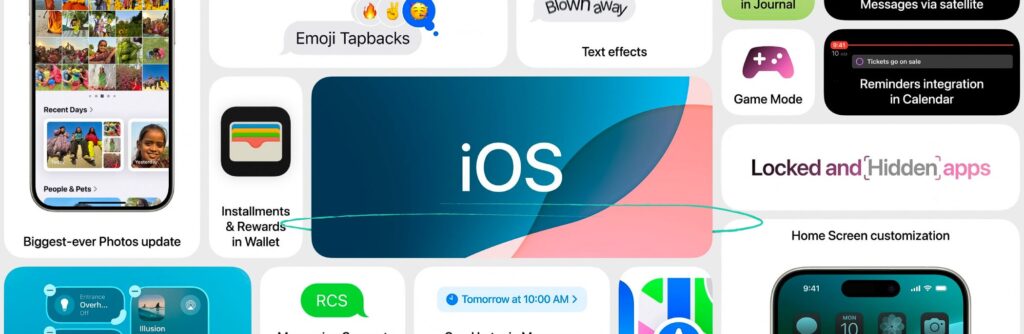
How to Use iOS 18 Update to Give Your App an Edge
Reading time: 5 min

How to Use iOS 18 Update to Give Your App an Edge

Mobile apps are all about ease of use and convenience. Nothing makes these two more prominent in your product than customization availability. Perhaps that’s why the new iOS 18 banked on fresh personalization and process simplification features. Today, we discuss Apple’s hot update and what it means for your applications. iOS 18’s New Features & Their Implications This article isn’t going to dissect and fawn over Apple’s new stuff. We’re going to talk about how you can benefit from it and what you should add to your own apps. That’s why we’ve picked only those features that will have the biggest impact on your product. Customizable App Icons Getting to set up your own space evokes a special sense of ownership and belonging. With iOS 18’s customization options, people can now spend even more time immersed in their phones by playing around with their app icons.  Apple now offers three styles for its icons: Light. Dark. Tinted. For u...
Read more
  • All Solutions
  • Accessibility Testing
  • Performance Testing
  • Regression Testing
  • All industries
  • E-Commerce & Retail
  • E-Learning
  • Fintech
  • Healthcare
  • Hospitality
  • Logistics & Delivery
  • Marketing & Sales
  • Media & Entertainment
  • Software Development
  • Sports & Fitness
  • Supply Chain
Reading time: 14 min

Why Testing Bottlenecks Are Scared of Automated Test Case Generation

We like to marvel at how technology keeps changing. Yet, some things stay the same. Some teams struggle with an avalanche of regression tests. Some with the complexities of scaling. Some with how difficult hiring talent has become. And the lucky ones grapple with all of them and more. The progress of tech creates new challenges. It's like the great filter: to survive and thrive, you must overcome the barriers in front of you. Today, we discuss a solution that can help you with that — automated test case generation. What Is Automated Test Case Generation? Automated test case generation (ATCG) is the use of tools and algorithms to create test cases. With the traditional approach, specialists go through specs, user stories, requirements, etc. Then, they identify relevant test scenarios. And finally, QA engineers create test cases themselves, writing them by hand. When done manually, this process can take around ten minutes. But per one test. So, this adds up significantly. And given t...
Read more
Reading time: 12 min

Advancing Your Business with AI Root Cause Analysis: Must-Knows from QA Experts

The cost of poor QA is high. Critical bugs in production, negative client feedback, hotfixes that eat away at dev time... That's just scratching the surface. If you've ever dealt with that, you know the value of root cause analysis in refining your team, product, and business. But you must also know how demanding it is. Luckily for everyone, AI found its way into this discipline as well. And it made it simpler, faster, and more precise, saving your resources. Today, we break down what AI-powered root cause analysis is, how it works, and why it matters for your business. What Is AI Root Cause Analysis? AI-based root cause analysis is the use of artificial intelligence to handle data work during RCA. You may have expected a definition that made it sound like a silver bullet. Well, don't be disappointed. Most of RCA is gathering, cleaning, organizing, and analyzing data. And AI is perfect for handling that. AI can quickly sift through massive log files or monitoring data. It can pinpo...
Read more
Reading time: 15 min

How to Use Root Cause Analysis Techniques to Advance Your Business

A critical bug in production isn't your greatest nemesis. Events that created it are. If you don't want to waste money, resources, and your team's precious time on treating just the symptoms, you should develop expertise in root cause analysis techniques. Because they transform mistakes into lessons that make your product better. What Is Root Cause Analysis? Root cause analysis (RCA) is a problem-solving method that aims to identify the reason for an issue. Its defining characteristic is that it doesn't treat the bug itself as an error. Only as a symptom of something bigger. For example, a software bug doesn't necessarily mean that someone failed. It can be due to poor code coverage, incorrect prioritization, faulty testing processes, or everything combined. An important aspect of techniques for root cause analysis is that they avoid assigning blame. They also view errors as growth opportunities. For instance, if a junior QA engineer missed a test, you should upskill them. If a devel...
Read more
Reading time: 9 min

Best Practices for CRM Data Migration

Automating business workflows is a key competitive advantage. To establish a fine-working automated system, a CRM solution is not just a choice, but a necessity. Growth exposes process gaps; the next necessary step is to standardize them in a CRM. However, the "stumbling block" for making the right decision is data migration. This step has stopped many businesses on their path to automation because the data was messy, inconsistent, or incomplete. According to Forbes, only 36 % of data migration projects succeed, meaning 64 % fail in meeting objectives or staying within budget and schedule. But we are here to help you! Today, our team, together with CRMiUM experts, wants to share practical advice on migrating data into a new CRM system. This post will highlight how good planning ensures that no records are lost and your company can start using the CRM with confidence. Common Pitfalls in CRM Data Migration Moving to a new CRM promises clarity and automation of workflows, yet data migra...
Read more
Reading time: 14 min

Cloud Migration Testing Strategy That Secures Business Continuity

To get to the treasure room where cost reduction, refined flexibility, and greater innovation reside, you first have to pass the boss fight: cloud migration. This beast guards an important entrance. Behind it, you'll find endless business opportunities. And to get through it, you'll need a confident cloud migration testing strategy---one that prevents disrupted operations, compromised data, and product delivery slowdown. Today, we discuss why cloud migration testing is much more complex than one might think and how to do it to set yourself up for success. The Risks of "Improvised" Cloud Testing Migration Imagine taking your entire house and throwing it into the sea. That's how going cloud feels without proper software testing services. There are no modifications to the structure, so it can sit atop liquid. No waterproofing. And gas pipes that don't link to the mainland... Your house is where you wanted it to be. But it doesn't function as it should. Common Issues of Inadequate Cloud M...
Read more
Reading time: 13 min

Handling the Unique Challenges of Microservices Integration Testing

There can be no good without the bad. Microservices architecture makes development easier by breaking down apps into smaller pieces. But it also greatly complicates unifying them into a functioning one. Such tradeoffs are common in IT. But there should never be compromises regarding quality. Because it's the only aspect that has no mentioned duality—a subpar product is just a subpar product. That's why today, we'll learn how to do integration testing in microservices without overexerting your team and budget while securing profit and happy customers. What Is Microservices Integration Testing? Integration testing in microservices is the process of checking how different services work together. You're ensuring that they operate properly when combined: exchanging data, following expected workflows, handling errors, etc. Let's take a look at a brief integration testing microservices example to understand this better. In an e-commerce system, integration testing would check how the orde...
Read more
Reading time: 14 min

Ensuring High-Functioning IoT Device Testing at Every Layer

Much like ogres and onions, IoT devices have layers. So working with them isn't for the weak. Because they combine physical components, embedded software, network connectivity, cloud services, and apps. And skipping or overlooking just one layer can cause everything to spiral. Thus, high-functioning IoT testing involves device testing across all these layers to ensure a stable, secure, and user-ready product. Today, we'll learn how to do it. Understanding IoT Device Testing Scope The scope of IoT device testing goes far beyond checking the physical hardware. Each device is part of a layered system that includes firmware, companion mobile apps, APIs, and cloud services. These layers don't just coexist. They constantly exchange data and commands, which means a flaw in one area can compromise the entire experience. Firmware underpins the device's core functions. If it isn't tested thoroughly, crashes or faulty readings are a given. They can result in high return rates, warranty claims...
Read more
Reading time: 9 min

How API Integration Testing Protects Your Users, Revenue, and Growth

Teams trying to create a memorable product are more likely to face development issues. Increased workload that's getting uncomfortable. Gaps in business continuity that overwhelm. Difficulties in finding the right experts that make you question the future. These are rare for crews that don't really bother. They can just ignore the strain and be fine with settling for less. That's why, however odd it may sound, we love when clients come to us with such troubles. It means they care. They care about their team members, product quality, and continuous progress. Today, we discuss API integration testing best practices that help you prevent and confidently deal with SDLC hurdles. What Is API Integration Testing? API integration testing is the process of checking how different APIs work together and interact with other parts of a system. The focus is on making sure that components collaborate as intended when combined. Allow us to get a tad more technical. APIs define how your syste...
Read more
Reading time: 10 min

Why Use Cloud-Based Mobile Testing: A Business Perspective

The tech won't stop getting more complex. And users will keep wanting more from software projects. How do you keep up with the ever-expanding ecosystem, sustain customer satisfaction, and not get your resources overwhelmed? Mobile cloud testing is a fine solution. And its position in the market is getting stronger. Today, we explore why it's the answer to a lot of your concerns. What Is Cloud Mobile Testing? Cloud mobile app testing means using cloud services instead of on-premise infrastructure to run testing. You can access tons of emulators and simulators. And even use real devices that are hosted in the cloud. The tedious process of setting up a physical device lab is no longer a worry. You get everything you need in one place and work with it from anywhere in the world. You can see why using the cloud for mobile application testing services is so alluring. And it'll become even more popular. For example, Amazon Web Series's customer base surpassed 4 billion businesses this year...
Read more
1 3 4 5 41

Subscribe to our newsletter

QA Madness
Privacy Overview

This website uses cookies so that we can provide you with the best user experience possible. Cookie information is stored in your browser and performs functions such as recognising you when you return to our website and helping our team to understand which sections of the website you find most interesting and useful.