Blog

Bad releases cost more than good QA. Here's everything CTOs, QA leads, and engineering teams need to stay ahead - automation strategies, security testing, real-world guides, and no fluff. Practical QA content for engineering leaders - automation strategies, security testing, CI/CD guides, and real-world insights from a team with 10+ years in the field.

How to Use iOS 18 Update to Give Your App an Edge
Reading time: 5 min

How to Use iOS 18 Update to Give Your App an Edge

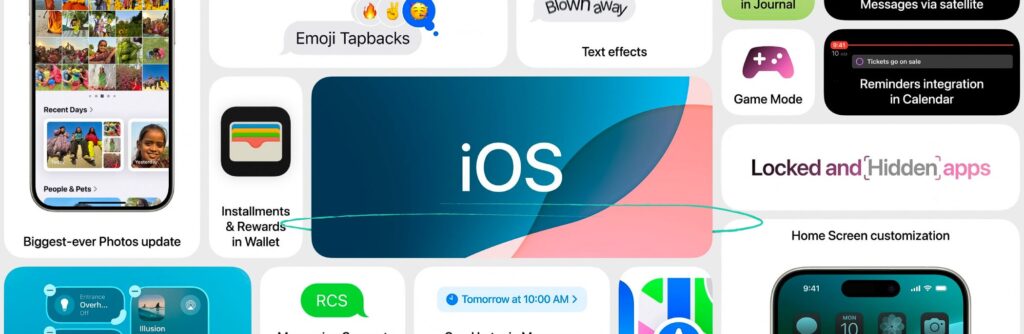
Mobile apps are all about ease of use and convenience. Nothing makes these two more prominent in your product than customization availability. Perhaps that’s why the new iOS 18 banked on fresh personalization and process simplification features. Today, we discuss Apple’s hot update and what it means for your applications. iOS 18’s New Features & Their Implications This article isn’t going to dissect and fawn over Apple’s new stuff. We’re going to talk about how you can benefit from it and what you should add to your own apps. That’s why we’ve picked only those features that will have the biggest impact on your product. Customizable App Icons Getting to set up your own space evokes a special sense of ownership and belonging. With iOS 18’s customization options, people can now spend even more time immersed in their phones by playing around with their app icons.  Apple now offers three styles for its icons: Light. Dark. Tinted. For u...
Read more
  • All Solutions
  • Accessibility Testing
  • Performance Testing
  • Regression Testing
  • All industries
  • E-Commerce & Retail
  • E-Learning
  • Fintech
  • Healthcare
  • Hospitality
  • Logistics & Delivery
  • Marketing & Sales
  • Media & Entertainment
  • Software Development
  • Sports & Fitness
  • Supply Chain
Reading time: 4 min

Breaking Bad in your code or how software bug can make fun of you?

First of all, what is “software bug”? Everyone understands that it isn’t an insect ( well, not anymore, anyway :-) ). According to Wikipedia: software bug is an error, flaw, failure, or fault in a computer program or system that causes it to produce an incorrect or unexpected result, or to behave in unintended ways.” Some bugs can be detected easily during development. But some bugs might be found late in the development process. There have been many attempts to classify the bugs. Most of these represent the general classification which is valid in the cycle of software development and evolution. The classification scheme given in Orthogonal Defect Classification defines eight categories of defects as assignment, checking, algorithm, interface, timing/serial, function documentation, and build/pack/merge. Most everything in such classification understandable, useful and boring. But, sometimes, going through a code, you may face a dark horse from the bug's world. There are ...
Read more
Reading time: 3 min

Why The IT World Wouldn’t Be Evolved Without Girls In It?

In honor of Women's Day, we would like to pay tribute to the women in Information Technology. Modern IT world viewed only as "a boy's thing". But this is not totally true. A lot of computing pioneers — the people who programmed the first digital computers — were women. Now, less than 25% of the IT workforce are women, but in the software testing sector the percentage filled by women is now approaching 50%. Women’s typical cognitive differences make them invaluable to IT teams. Let's pay attention to the history. One might believe that women did not play an important role in the beginnings of computer science, but in reality they have made significant contributions in many areas, starting from the early days. In any discussion of the pioneers in computing, the names of two visionaries immediately come to mind: Augusta Ada Byron Lovelace (1815 – 1852). She is often described as theworld's first computer programmer. Analyst, metaphysician, and founder of scientific comput...
Read more
1 40 41

Subscribe to our newsletter

QA Madness
Privacy Overview

This website uses cookies so that we can provide you with the best user experience possible. Cookie information is stored in your browser and performs functions such as recognising you when you return to our website and helping our team to understand which sections of the website you find most interesting and useful.